Build kiosk Linux fast with web technologies.
Build minimal, bootable kiosk Linux systems with a modern web stack. Strux brings together Vue or React frontends, typed Go backends, and a reproducible image pipeline in one workflow.
3
Target architectures
Can build ARM64, ARMhf, and x86_64 images from one toolchain.
20+
Lifecycle hooks
Explicit extension points for kernels, overlays, services, and packaging.
<15min
To first working image
From scaffold to bootable local test image without leaving the CLI.
1
Delivery interface
Init, develop, build, and run under a single mental model.
Built for accelerated product development
Strux feels closer to a modern framework than a collection of recipes and scripts. We make embedded development easy, governable, and fast without forcing you into an expert-only build system.
One CLI Tool to Rule Them All
The Strux CLI handles everything from start to finish. From creating your Strux project, to building, to testing, to deploying.
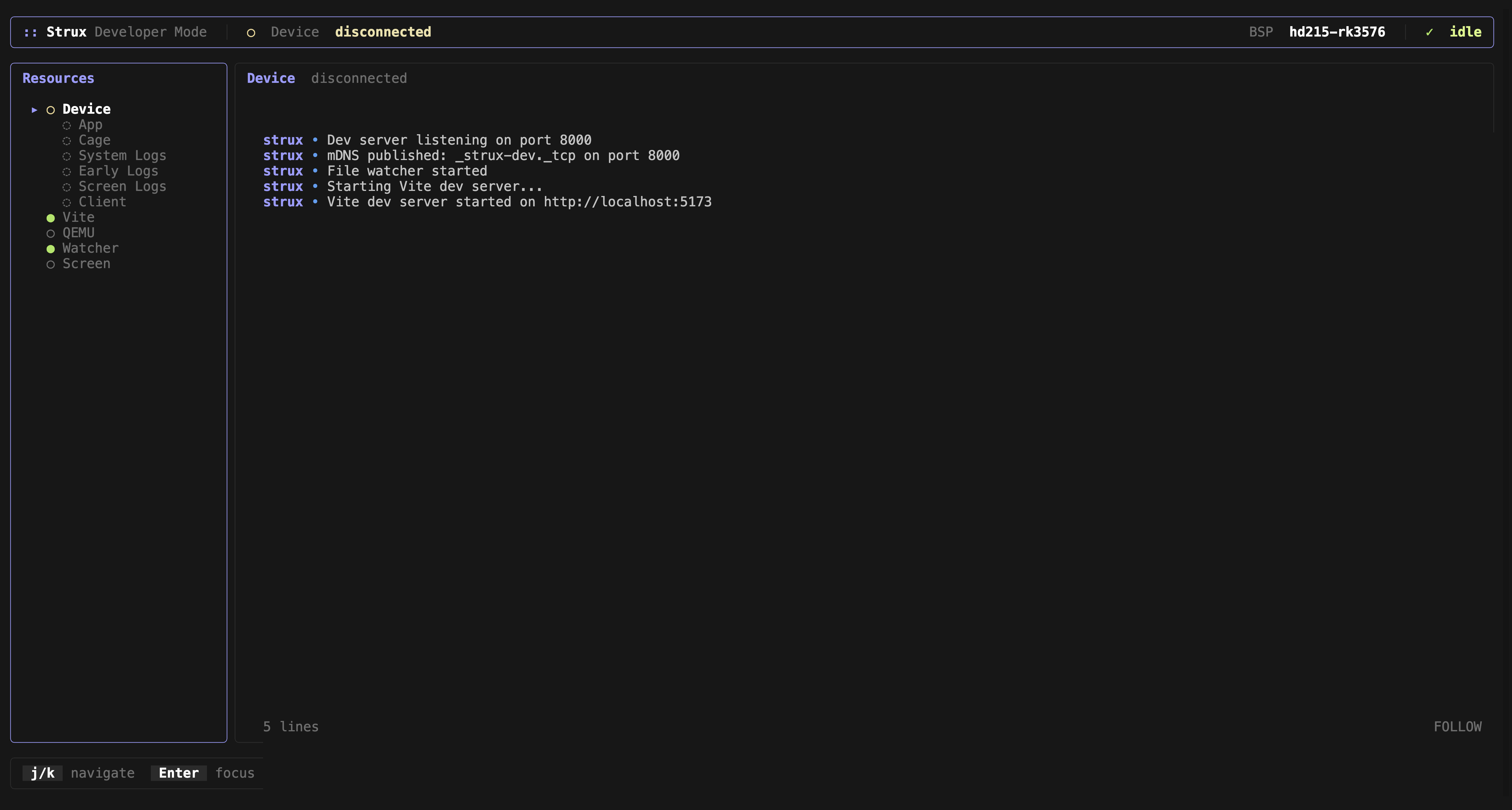
Strux Dev Mode
Development view for running the same workflow against real targets and debug surfaces.
Step 1/3
Scaffold
Start from a known architecture and application template.
Use the Strux CLI to scaffold a new project with your chosen frontend framework and target architecture.
$▊
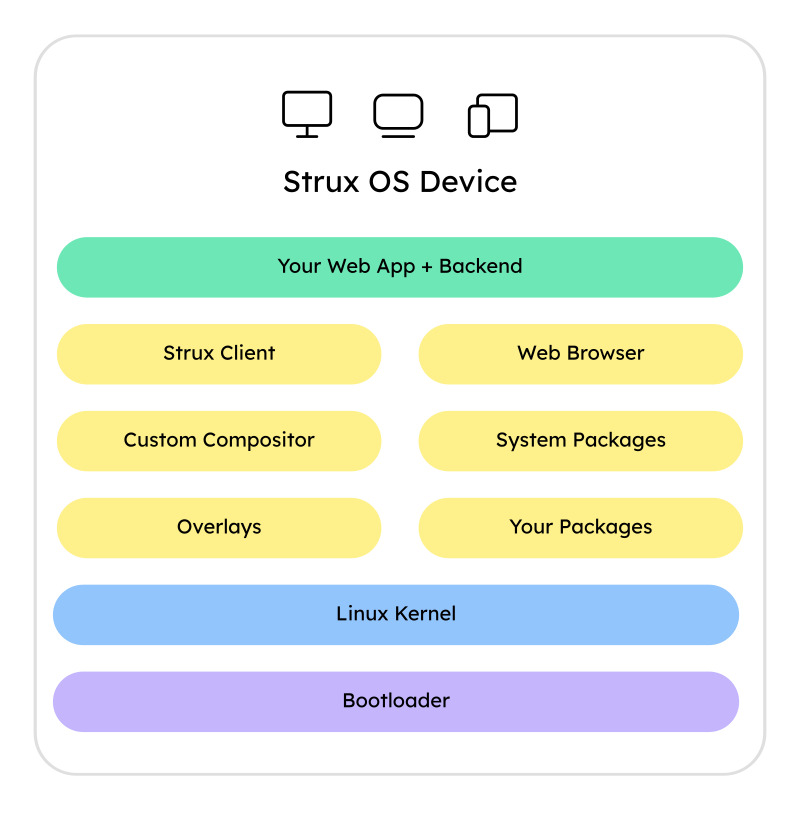
An Operating System designed for kiosks and embedded displays.
Your team owns the app and service layer, and Strux handles the rest. Strux assembles the runtime, browser environment, compositor, and system image below while giving you the power to customize the entire stack.
Questions teams ask before they bet on a new embedded workflow.
Strux is opinionated, so the right questions are usually about fit, workflow, and how much of the stack it manages for you.